







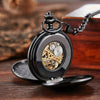



Do pocket watches need batteries? It depends on the movement: mechanical pocket watches need no battery at all, while quartz pocket watches run on a single small cell that typically lasts for a year or more. Mechanical models are powered by a wound mainspring, and automatic ones wind themselves with movement. This guide explains how each type works, how to tell which you own, and what to do when it stops.
Do pocket watches need batteries?
The honest answer is: some do, and most traditional ones do not. A pocket watch gets its energy from one of three sources, and only one of them involves a battery.
Mechanical pocket watches are the classic design. Turning the crown tightens a coiled spring called the mainspring. As it slowly unwinds, it drives a train of gears and the balance wheel, which divides time into equal beats. There is no electronics and no cell, so a battery would serve no purpose.
Automatic pocket watches are also mechanical. They contain a weighted rotor that spins as the watch moves, winding the mainspring for you. Because a pocket watch sits still in a pocket far more than a wristwatch moves on an arm, many owners still give the crown a few turns to keep it running well.
Quartz pocket watches are the exception. A small battery sends current through a quartz crystal, which vibrates at a steady rate and keeps time very accurately. These are common in modern, affordable and fashion-style pieces, including pendant watches worn on a chain.
So the question is not about pocket watches as a whole, but about the movement inside yours. For background on how the form developed, see the Wikipedia article on the pocket watch, which explains why the mechanical design dominated for centuries.
Do mechanical watches need batteries?
No. A mechanical watch does not need a battery, and this applies equally to pocket watches and wristwatches. People often ask whether a mechanical watch needs a battery because they assume every modern watch is electric. In fact, a mechanical watch is powered entirely by stored mechanical energy.
There are two main kinds. A hand-wound watch needs you to turn the crown, usually once a day, until you feel gentle resistance. An automatic watch winds itself through motion, although it can also be wound by hand if it has been left idle.
The trade-off is upkeep. Instead of replacing a cell, you look after the movement itself. Over time, the lubricating oils age, so a mechanical watch benefits from a service by a qualified watchmaker. The interval depends on the watch and how often it is used, so ask your watchmaker for advice on your own piece.
Many collectors prefer this very reason: a mechanical watch has no part that simply runs out. With sensible care, it can keep going for generations.
How can you tell if a pocket watch is quartz or mechanical?
Before buying a battery or winding anything, check which movement you have. Winding a quartz watch is unnecessary, and forcing a crown can cause damage.
- Look at the second hand. A quartz watch usually ticks once per second, while a mechanical one sweeps in smaller, faster steps.
- Turn the crown gently. If it winds with slight resistance, the watch is mechanical. If it spins freely and only sets the hands, it is likely quartz.
- Listen closely. Mechanical watches have a fast, soft ticking sound, whereas quartz makes a single, distinct tick.
- Check the dial and case back. Words such as “quartz” or “battery” suggest an electric movement. Some cases have a small opening or a removable back that reveals a cell.
- Open the case back. A round silver or coin-like battery confirms quartz, while visible gears and a spring indicate mechanical. If you are unsure, ask a watchmaker rather than prising it open yourself.
What are the signs that a quartz pocket watch battery is failing?
Quartz movements often give a few clues before stopping completely. A common one is that the watch runs slow or loses time, as the community advice often points out when a quartz piece keeps poor time.
Other signs include a second hand that jumps in two-second steps on a model that normally ticks every second, a faint or erratic movement, or a watch that stops and restarts when moved. If the hands are completely still, the cell is the first thing to check.
Replacing it is usually quick, but it needs care. Use the same battery type as the original, which is printed on the cell itself, and avoid scratching the case when opening it. If the watch is sealed, antique, or valuable, a watchmaker is a safer choice. Remove a dead battery promptly, as old cells can leak and harm the movement.
Choosing a pocket watch at Univers Gousset
At Univers Gousset, each listing states clearly whether the movement is mechanical, automatic or quartz, so you know before ordering whether you will be winding a crown or changing a cell.
If you enjoy the ritual of winding, a piece such as this open face mechanical pocket watch needs no battery at all, only a little daily attention. If you prefer a watch you can simply wear and forget, quartz pendant styles are an easy option.
You can compare styles, cases and movements in our full pocket watches collection. Whatever you choose, check the product description for the movement type, and keep a note of it for when it is time to wind, service or replace a battery.
Frequently asked questions
Do all pocket watches need batteries?
No. Only quartz pocket watches use a battery. Mechanical and automatic pocket watches run on a mainspring, which you wind by hand or which is wound by motion. Always check the movement type before assuming a cell is needed.
How often should I wind a mechanical pocket watch?
Most hand-wound pocket watches are wound once a day, ideally at the same time. Turn the crown gently until you feel resistance, then stop. Never force it, as overwinding by pushing past that point can damage the mainspring.
How long does a pocket watch battery last?
It varies by movement and cell, but a quartz pocket watch battery commonly lasts around a year or longer. Check the manufacturer’s information for your model, and replace the cell as soon as the watch stops.
Can I turn a quartz pocket watch into a mechanical one?
Not in a practical way. The two movements are built differently, so changing from one to the other would mean replacing the whole movement. It is usually simpler to choose the type you prefer when buying.
Conclusion
So, do pocket watches need batteries? Only quartz models do, while mechanical and automatic pocket watches run on a wound spring with no cell at all. Identify your movement first, then wind it or replace the battery accordingly. To find the right style for you, browse our pocket watches collection.