


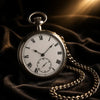


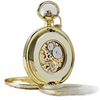

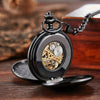
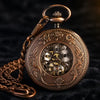
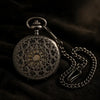

A good pocket watch is one that keeps steady time, is built from solid materials and suits the way you plan to use it. For most buyers, that means a reliable movement, a sturdy case and a chain that feels secure. This guide explains what is a good pocket watch for collectors, gift buyers and everyday wearers, and whether pocket watches hold their value.
What is a good pocket watch?
A good pocket watch combines four things: a dependable movement, a well-made case, a clear dial and a design you actually enjoy carrying. No single feature matters more than the others. A beautiful case with a tired movement will disappoint, and a fine movement in a flimsy case will not last.
Start with the movement. Mechanical pocket watches are powered by a mainspring, either wound by hand with the crown or, in rarer automatic models, wound by motion. Quartz pocket watches use a battery and are usually more accurate and cheaper to maintain. Neither is automatically better; it depends on whether you value tradition or convenience.
Next, look at the case. Brass, copper, stainless steel and silver-toned finishes are all common, and a good case closes firmly, with no gaps and no rattling. The history of the form is well documented, and Wikipedia's overview of the pocket watch explains how open-face and hunter-case styles developed.
Finally, consider style. An open-face watch shows the dial at once, which suits quick reading. A hunter case has a hinged cover that protects the glass and gives a more formal feel. A skeleton dial lets you see the mechanism at work. The best choice is the one you will reach for often.
Are pocket watches a good investment?
Some pocket watches hold or gain value, but most are better thought of as objects to enjoy rather than a reliable investment. Value depends on the maker, age, condition, rarity and whether the movement is original and working. Two watches that look alike can be worth very different amounts.
Antique watches from respected makers can interest serious collectors, especially when they are well preserved and come with documentation. Modern fashion pieces are different. They are bought for design and gifting, and they should be priced accordingly. Buying one for the pleasure of owning it is a sensible approach.
If you are considering an older watch as a financial purchase, be cautious. Hallmarks, case materials and movement details need checking, and condition can change the picture a great deal. Ask a qualified watchmaker or a specialist valuer for an assessment before paying a premium, and do not rely on a seller's description alone.
A practical rule is simple: buy what you love, keep it in good order and treat any increase in value as a bonus.
Is a mechanical watch good, and are mechanical watches good for pocket use?
Yes, a mechanical watch can be an excellent choice, particularly if you enjoy craftsmanship and the ritual of winding. A pocket watch is a natural home for a mechanical movement, because the larger case leaves room for a bigger mechanism and, often, a visible one.
There are trade-offs. Mechanical watches are usually less accurate than quartz and may gain or lose a little time each day. They also need winding regularly and occasional servicing by a watchmaker. In return, they have no battery, a pleasing ticking sound and a character that many owners value.
Pocket use is kinder to a movement in some ways, since the watch is not knocked about on a wrist. It is also gentler on the dial and glass. Even so, keep it away from damp, avoid dropping it and wind it gently, stopping when you feel resistance.
If you want simple, grab-and-go reliability, quartz is hard to beat. If you want something to appreciate and perhaps pass on, mechanical is the more rewarding path.
Six signs to check before you buy
Whether you are shopping online or in person, a few checks will help you judge quality quickly.
- Smooth winding: on a mechanical watch, the crown should turn evenly without grinding or sudden slack.
- Steady running: the watch should keep going after winding, and the second hand, if present, should move without hesitation.
- A secure case: lids and backs should close cleanly, and a hunter cover should snap shut without wobbling.
- A clear dial and glass: numerals should be sharp, hands should not touch the glass, and there should be no deep scratches or cracks.
- A solid bow and chain fitting: the ring at the top and the chain clip should feel firm, since this is where a watch is most often dropped.
- Honest description: reliable sellers state the movement type, case style and size clearly, and they offer a way to ask questions.
For an antique piece, add one more step: have a watchmaker inspect it. Hidden wear inside the movement is not visible from the outside.
Good pocket watches at Univers Gousset
At Univers Gousset, we select pocket watches for people who want character, usability and fair value. Our range covers mechanical and quartz models, open-face and hunter cases, and skeleton dials, so you can match the watch to your taste rather than compromise.
If you like the traditional look of a railway-style dial, the vintage open-face railroad style pocket watch is a good place to begin. Its clear dial makes it easy to read, and the open-face design suits daily carrying with a waistcoat or jacket.
If you prefer to watch the mechanism, skeleton designs are worth a look. Pendant styles are also popular as gifts, since they can be worn on a chain around the neck.
You can browse every style in our pocket watches collection and compare case types, movements and finishes side by side before you decide.
Frequently asked questions
Is an open-face or a hunter-case pocket watch better?
Neither is better overall. Open-face watches are quicker to read because the dial is always visible. Hunter cases protect the glass with a hinged cover and look more formal. Choose open-face for convenience and a hunter case if you value protection and a traditional feel.
How often should I wind a mechanical pocket watch?
Most mechanical pocket watches are wound once a day, ideally at the same time. Turn the crown gently until you feel resistance, then stop. Forcing it can damage the mainspring. If you are unsure, follow the guidance that comes with your particular watch.
Is a quartz pocket watch a good choice?
Yes. A quartz pocket watch is usually accurate, needs no winding and is simple to maintain beyond occasional battery changes. It suits everyday use and gifting well. Collectors who enjoy traditional craftsmanship may still prefer a mechanical movement for its character.
How should I carry and store a pocket watch?
Attach it to a chain and fasten the clip securely to a waistcoat or belt loop. Keep it in a soft pouch or box when not in use, away from moisture and strong knocks. Avoid keeping it loose with keys or coins.
Should I have an old pocket watch valued?
If you suspect a watch is antique or made from precious metal, yes. A qualified watchmaker or specialist valuer can check hallmarks, materials and the movement, and give you a reliable view. Avoid guessing at value from appearance alone.
Conclusion
So, what is a good pocket watch? It is one with a dependable movement, a sturdy case, a readable dial and a style you enjoy. Treat it as a pleasure first and an investment second, and have anything old or valuable checked by an expert.
Ready to find yours? Explore our pocket watches collection and choose the one that suits you.